BPC-157 or TB-500? How Two Repair Peptides Differ in Origin, Mechanism and Study Design
BPC-157 and TB-500 are the two most studied “repair” peptides in this literature, and they are often talked about as if one could stand in for the other. They can’t. They act at different points in tissue repair, which is exactly why researchers run them in comparison arms and in combination.
Different layers of the repair process
TB-500’s actin mechanism governs whether cells are able to move, and cells migrating into a wound bed depend on actin by definition. BPC-157’s reported effects center on the local environment those cells move into: blood-vessel formation, growth-factor expression and cytoprotection. That split is the reason combination protocols turn up both in published work and in lab practice.
The same split shows in assay choice. In vitro, TB-500 is usually examined with migration and scratch tests, while BPC-157 is examined with angiogenesis and cell-survival assays.
Matching the compound to the question
- Questions about migration, such as scratch assays or chemotaxis, point to the actin mechanism and so to TB-500.
- Questions about vascularization, GI cytoprotection or tendon fibroblast models point to BPC-157.
- Comparative or combined-arm designs need both compounds, either as separate vials or as a blend.
The two compounds in one table
| Feature | TB-500 (Tβ4) | BPC-157 |
|---|---|---|
| Where it comes from | Synthetic version of thymosin beta-4, a natural human peptide | Synthetic fragment based on a protein in human gastric juice |
| Length and mass | 43 amino acids (~4.9 kDa), or an active fragment | 15 amino acids (~1.4 kDa) |
| Main mechanism | Sequesters G-actin, driving cell migration and differentiation | Cytoprotection, angiogenesis via VEGF, NO-system modulation, fibroblast migration through FAK–paxillin |
| Typical models | Skin wounds, corneal repair and cardiac injury in rodents; some human eye-drop trials | Tendon and ligament transection, GI mucosal injury in rodents |
| Stability | Needs standard peptide handling | Unusually robust and acid-stable |
| Published human trials | Ophthalmic only (Tβ4 eye drops) | None |
What this store lists for each
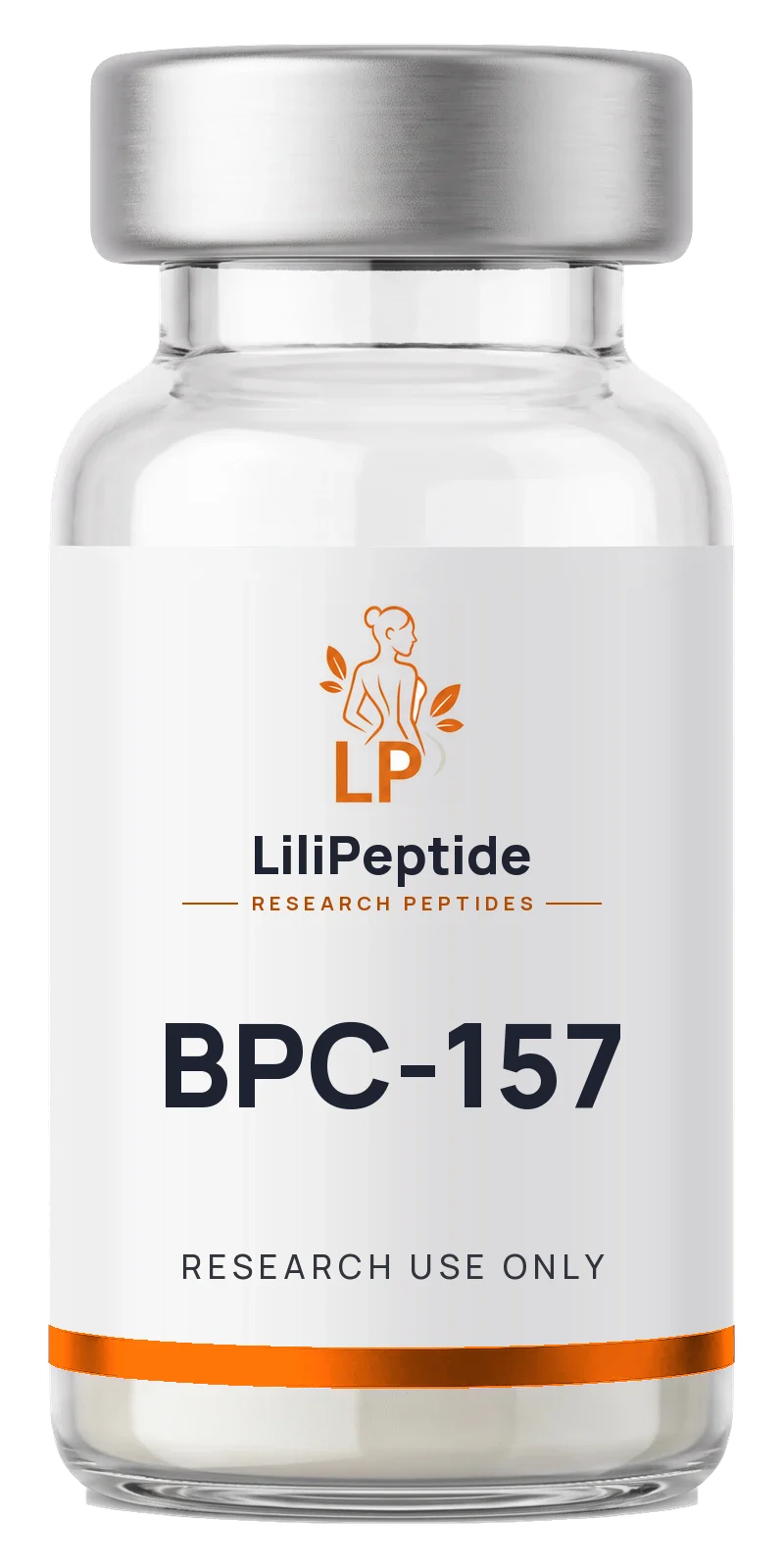
For separate arms, the store carries BPC-157 (5mg, 10mg, 20mg) and TB-500 (Thymosin Beta-4) (5mg, 10mg). For a combined arm there is the BPC-157 + TB-500 Blend in 10mg and 20mg; check the listing for how that total divides between the two compounds before you do any molar accounting.
Two reports on our COAs page are relevant, both issued by Freedom Diagnostics Testing for LiliPeptide samples: BPC-157 10mg, batch LIL8032026BLU, tested 23 Sep 2026; and TB-500 10mg, batch listed as “Clear Pink Cap”, tested 31 Aug 2026. Each report applies only to the single-compound sample it names. The page has no report for the blend.
Full write-ups: the BPC-157 literature guide and the thymosin beta-4 guide. For research use only. Not for human or veterinary use.